We use our own and third-party cookies to analyse our services and show you advertising related to your preferences based on a profile of your browsing habits (e.g. pages visited). You can get more information and configure your preferences HERE.
Necessary cookies
Always active
These cookies are strictly necessary for the site to function. You can deactivate them by changing your browser settings, but you will not be able to use the site normally.
Cookies used
Functional cookies
These cookies provide the information necessary for the applications on the site itself or integrated by third parties. If you deactivate them, you may encounter problems in the operation of the page.
Cookies used
The user is informed that he/she has the possibility of configuring his/her browser so that he/she is informed of the reception of cookies, and may, if he/she so wishes, prevent them from being installed on his/her hard drive.
Below we provide the links of various browsers, through which you can make this configuration:
The Production of Pata Negra Ham: Why the Aging Process Begins Long Before the Ham Enters the Cellar
The production of a high-quality Pata Negra ham begins long before it enters the curing cellar. In the Iberian ham industry, the final quality depends first and foremost on the animal’s origin, its percentage of Iberian breed, and its diet. For bellota hams, the final fattening phase takes place in the dehesa, where the pigs feed on acorns and the natural resources of the environment.
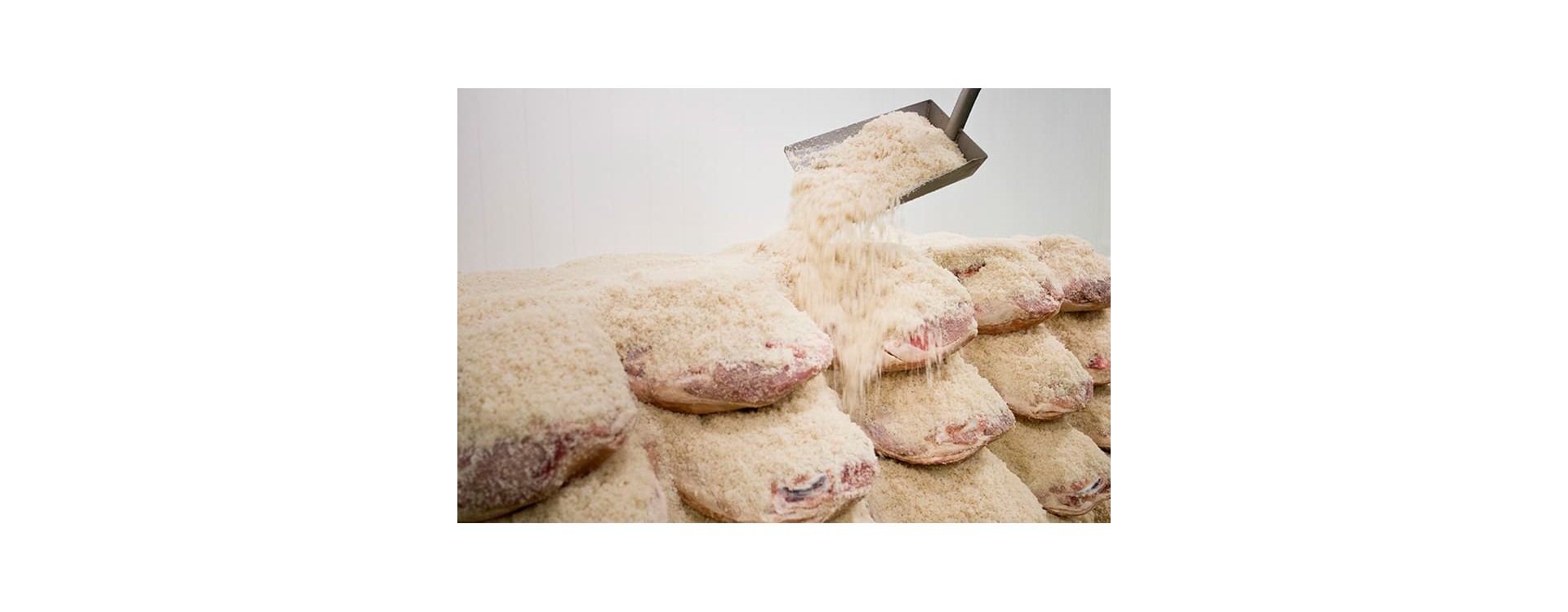
Next comes the actual production process. In Iberian products and in protected designations such as the Jabugo PDO, the process involves several successive stages: salting, washing, salt balance adjustment, drying, and curing. This slow process is not incidental. It allows for the gradual dehydration of the ham, the distribution of fat within the muscle, and the development of the characteristic aromas of a great Spanish ham.
In other words, the aging process cannot compensate for a mediocre raw material. It enhances a piece that is already the result of high-quality breeding, feeding, and craftsmanship.
Ham curing: how long does it take for a Pata Negra to mature?
Ham curing relies above all on time. Spanish regulations set minimum aging periods for Iberian hams, with a minimum of 20 months for certain cuts. But in practice, quality producers often work with much longer aging periods.
For premium hams, the aging process can extend over several years. This additional time allows the ham to slowly lose moisture, concentrate its flavors, and develop a more complex texture on the palate. It is also during this phase that the marbling becomes more pronounced and the flavor profile gains depth.
Consumers should therefore keep one simple idea in mind: a long aging period alone does not guarantee quality, but without time, there is no great Iberian ham.
How to recognize a quality Pata Negra ham
To recognize a quality Pata Negra ham, the first step is to look for the official seal. In Spain, Iberian hams are identified by a color-coded system that distinguishes the different categories.
The black seal corresponds to 100% Iberian acorn-fed ham. Red indicates Iberian acorn-fed ham from animals that are 50% or 75% Iberian. Green identifies Iberian free-range ham. White corresponds to Iberian grain-fed ham.
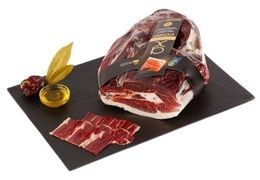
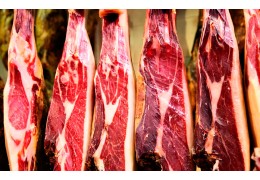
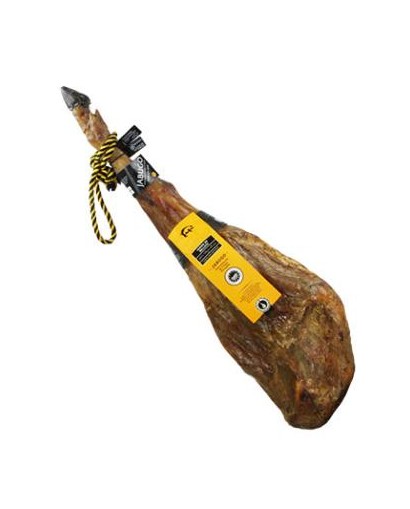
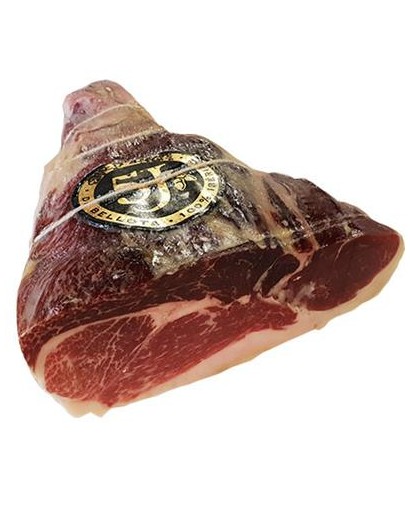
If you’re looking for the highest quality, the black brida is the first thing to check. Next, examine the ham: a beautiful marbling of fat, shiny meat, a supple texture, and melt-in-your-mouth fat are good indicators. Finally, the product label must be complete and legible. On a truly premium ham, traceability is never unclear.
How to store a Pata Negra ham after opening
Knowing how to store a Pata Negra ham is essential to preserving its texture and flavors. Once opened, the ham should be kept in a cool, dry, and well-ventilated place, away from heat and direct sunlight.
After slicing, it is advisable to protect the surface with a small amount of white fat taken from the ham itself. This method helps limit oxidation of the cut surface. It is also best to avoid permanent airtight coverings on the entire piece, to allow the ham to breathe.
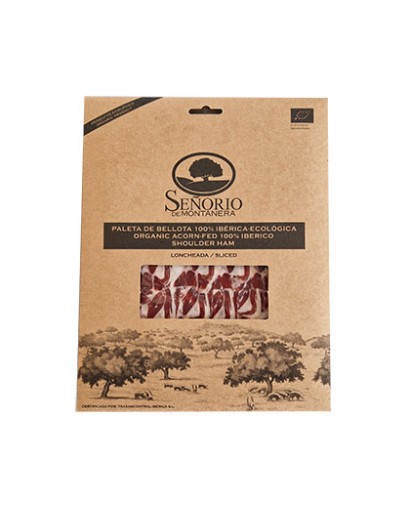
If the ham is already sliced and vacuum-sealed, it should be stored in the refrigerator. Before serving, it should be taken out in advance so that it can slowly return to the appropriate serving temperature. This is when the fat becomes melt-in-your-mouth tender and the flavors are best expressed.
Conclusion
The curing of the ham is one of the great secrets of the Pata Negra, but it cannot be understood in isolation. It is the result of a complete production chain: breed, diet, raising in the dehesa, official inspection, slow production, and extended maturation. To make a good purchase, you must therefore know how to recognize a ham, choose the right category, and store it properly once you get home. It is this comprehensive understanding that allows you to distinguish a simple Spanish ham from a true premium product.