We use our own and third-party cookies to analyse our services and show you advertising related to your preferences based on a profile of your browsing habits (e.g. pages visited). You can get more information and configure your preferences HERE.
Necessary cookies
Always active
These cookies are strictly necessary for the site to function. You can deactivate them by changing your browser settings, but you will not be able to use the site normally.
Cookies used
Functional cookies
These cookies provide the information necessary for the applications on the site itself or integrated by third parties. If you deactivate them, you may encounter problems in the operation of the page.
Cookies used
The user is informed that he/she has the possibility of configuring his/her browser so that he/she is informed of the reception of cookies, and may, if he/she so wishes, prevent them from being installed on his/her hard drive.
Below we provide the links of various browsers, through which you can make this configuration:
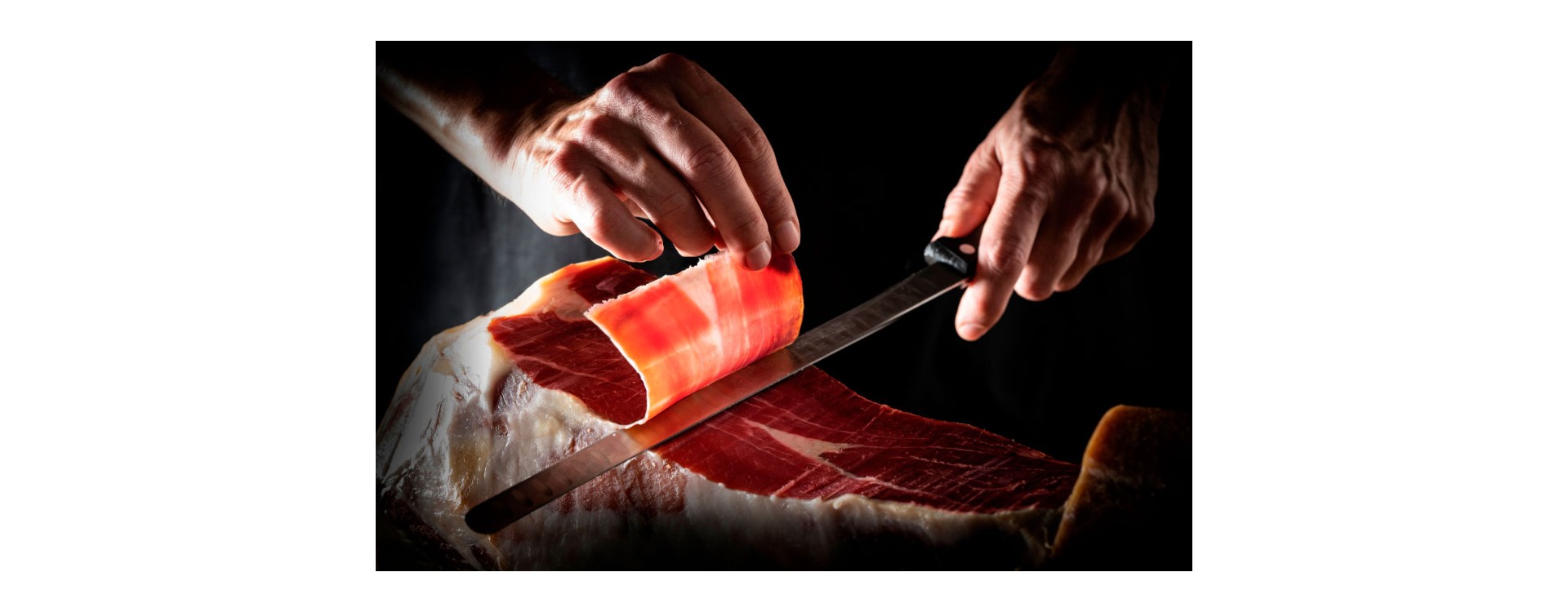
Choosing the perfect ham can be a challenge, given the wide variety and different price ranges available. In this article, we'll make it easy for you, helping you to understand the differences between types of ham, the importance of their origin, and offering practical advice on buying and preserving them.
Types of Ham: Serrano vs. Iberian
When it comes to Spanish hams, the options are many. Here's how to understand them:
Serrano ham: From white pigs, such as the Duroc or Long Jersey breeds. Known for its traditional flavor and firm texture.
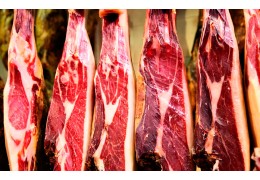
Iberian Ham: From Iberian pigs, typical of southwest Spain. These pigs are free-range, feeding on acorns and other natural resources, resulting in a ham with an intense flavor and delicious, fatty texture, especially in varieties such as Pata Negra 100% Iberian Bellota.
Differences between Ham and Shoulder
It's important to distinguish between ham (the pig's hind legs) and shoulder (its front legs). Generally speaking, the ham is larger and offers more meat, while the shoulder is more economical but with a greater proportion of fat and bone.
The Importance of the Origin of Iberian Ham
The origin of Iberian ham is crucial, and is defined both by the purity of the pig's breed and by where it is reared. There are three main types:
100% Iberian pig: the highest breed purity, resulting in the 100% Iberian Bellota Pata Negra ham.
75% Iberian pig: a less common blend, similar to the 50% Iberian.
50% Iberian pig: a cross-breed that offers quality hams at affordable prices, being the best-selling in Spain.
These categories are also distinguished by their feed and type of rearing, which is reflected in the color labels on each product:
Black: Pata Negra Ham, from 100% free-range Iberian pigs.
Red: Bellota Iberian Ham, from 50% or 75% Iberian pigs.
Green: Cebo de Campo Iberian Ham, with a minimum of 50% Iberian breed.
White: Cebo Iberian Ham, of inferior quality and not marketed by Spain-Gourmet.
Geographical origin
Serrano ham is produced in several regions of Spain, while Iberian ham comes mainly from Extremadura and Andalusia, with specific rearing and curing areas that guarantee its unique quality.
How to buy and store
When buying, consider:
Do you prefer Iberico or Serrano?
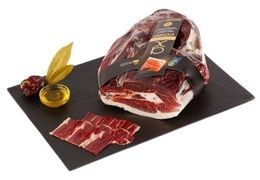
Ham
or shoulder?
Whole, boneless or sliced?
For preservation:
Whole ham: Avoid humidity and excessive heat.
Boneless
ham
: Best kept in a cool place and cut into thin slices.
Sliced
ham
: Keep refrigerated and allow to stand at room temperature before eating.
With this guide, we hope you'll find the ideal ham for your needs and tastes, taking advantage of every bouch