Cookie preferences



 Español
 Français
 Deutsch
 Italiano
 Svenska
 Nederlands
 Português
 Dansk
Dansk
 Polski
 Română
 български език
 Magyar
 Čeština
 Slovenščina
 Slovenčina
 Русский
 中文
中文
 ελληνικά
Extra virgin olive oil is the cornerstone of the Mediterranean diet. Find out why incorporating it into your daily...
Search in blog
Latest posts
The health benefits of extra virgin olive oil
Read more
The origins of tapas: the history and tradition of Spanish cuisine
Read more
Tapas, true ambassadors of Iberian cuisine, have taken the world by storm. Discover their fascinating origins, from...
What is ‘Pata Negra’ ham? The meaning and secrets behind the world’s finest ham
Read more
The term ‘Pata Negra’ refers exclusively to 100 per cent Iberian ham from acorn-fed pigs, identified by an official...
Acorn-fed Iberian ham: a surprising source of oleic acid (the ‘good’ cholesterol)
Read more
What makes Iberian ham so special is its nutritional quality and the way it is produced. Acorn-fed Iberian ham is...
Maturing ham: how to recognise, choose and store a Pata Negra ham
Read more
Pata Negra ham captivates with its flavour, its melt-in-the-mouth texture and its reputation as an exceptional...
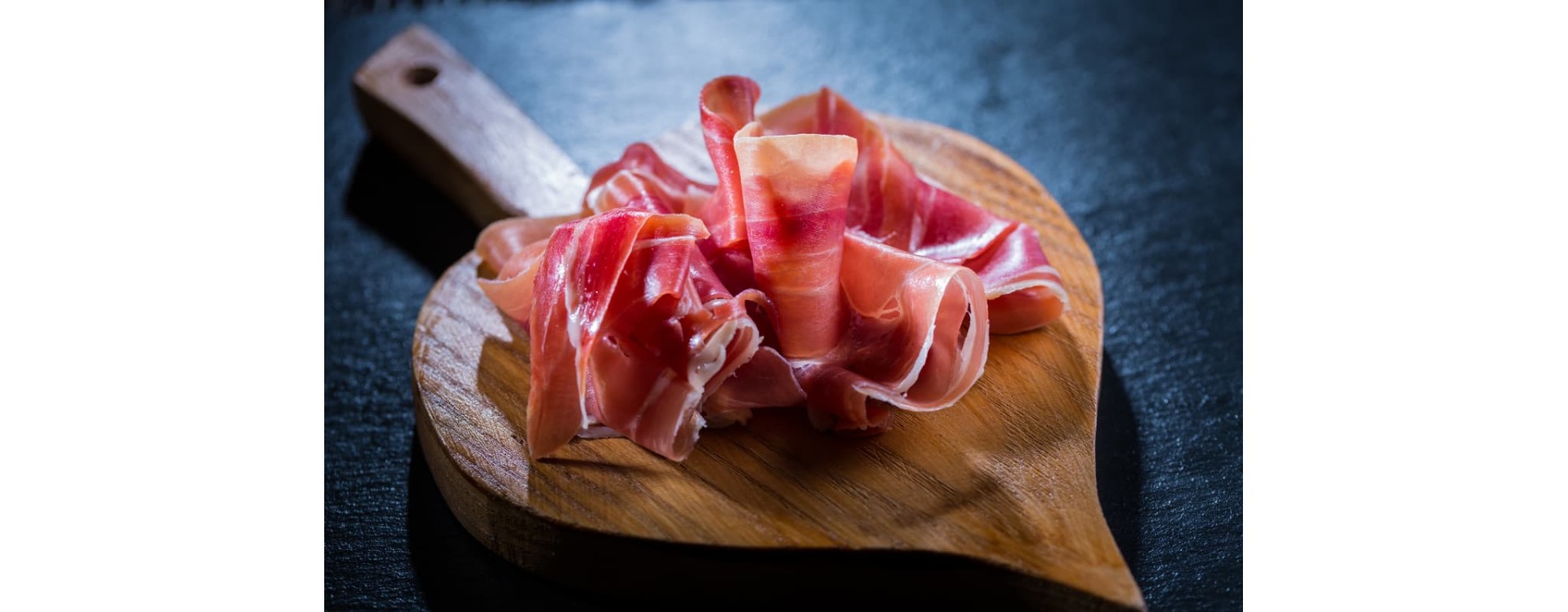
Discovering the roots of Serrano ham: A journey through its origins
Serrano ham, a Spanish gastronomic treasure, seduces food lovers with its unique flavor and delicate texture. This international reputation conceals a rich and fascinating history, rooted in Spain's ancestral traditions. Discover the origins of Serrano ham, from the Spanish mountains (Sierra) to our tables.
The history of Serrano ham
The history of Serrano ham goes back centuries, long before Spain became the country it is today. The Romans were among the first to appreciate the qualities of cured ham. They used salting and drying methods to preserve the meat, enabling them to keep it for long periods of time for winter feeding and long cross-country journeys. These techniques have been passed down and improved over the centuries, making Serrano ham an integral part of Spanish culture.
The Reconquista, during which the Christian kingdoms reconquered the Iberian Peninsula from the Moors, also played a key role in the history of Serrano ham. The Christians adopted and adapted meat-preserving techniques, and ham became a symbol of their cultural and religious identity, often eaten at feasts and celebrations.
The terroir of the Sierra
The term "Serrano" refers to the sierra, the mountain, which indicates where the ham comes from. Mountains like the Sierra Nevada have an ideal climate for curing Serrano ham. Cold, dry winters and hot summers create the ideal conditions for the natural curing of the sausage.
The production process
Serrano ham is produced using everything that has been acquired over the centuries. To make the best Serrano hams, the first step is to select the best pigs. Once the pigs have been slaughtered and cut up, the first step is salting, where the meat is covered in salt for several days. The meat is then dehydrated and ready for curing.
After this passage through the salt, the pieces are washed to remove surface salt, and the hams are hung up to begin their maturing process. It is important to control the temperature and humidity of the drying rooms. Maturing can last up to 23 months for the best cuts, such as Trevelez ham. During this time, the ham acquires its extraordinary taste and finesse.
Varieties of Serrano ham
There are several categories of Serrano ham, defined according to their maturation and varying according to the producer. Reserva ham can be aged between 12 and 15 months (16 months for some producers). Gran Reserva is matured for more than 15 months (18 months for some producers). Then there are Serrano hams that are matured for up to 23 months.
The best Serrano hams are those that have no additives and are naturally matured.
Cultural and economic importance
Serrano ham is a true symbol of Spain. You can always find good hams in Spain. It is very important to the rural economy of certain regions. There are many breeders and small producers, family businesses that depend on this sector of activity.
It's a know-how that has been handed down from generation to generation and is part of Spanish culture.
Serrano ham is everywhere in Spain. It is served as tapas in thin slices and can be accompanied by bread with tomato and often on charcuterie boards.
Buy Serrano ham online
Spain Gourmet offers you the finest Spanish hams, including Serrano Ham, which is additive-free and naturally matured in the Sierra de Granada region of Andalusia. A naturally-produced ham is a gastronomic gem. It's a far cry from the industrial processes that denaturalize hams.
Posted in:
Sample Category
Related posts
 La meilleure charcuterie espagnole disponible en ligne
Découvrez la meilleure charcuterie espagnole en ligne avec Espagne Gourmet.
Read more
Les meilleurs jambons pata negra d'Espagne
Découvrez le secret des meilleurs jambons Pata Negra d'Espagne! Plongez dans notre guide complet et savourez un...
Read more
Guide pour choisir son jambon : clés pour une sélection parfaite.
Découvrez les clés d'une sélection idéale de jambon avec notre guide pratique. Du jambon Serrano classique aux...
Read more
Tout savoir sur l’étiquetage du jambon ibérique
Les étiquettes en couleur des jambons ibériques vous aident à découvrir facilement la qualité du jambon que vous...
Read more