Cookie preferences


 Español
 Français
 Deutsch
 Italiano
 Svenska
 Nederlands
 Português
 Dansk
Dansk
 Polski
 Română
 български език
 Magyar
 Čeština
 Slovenščina
 Slovenčina
 Русский
 中文
中文
 ελληνικά
Extra virgin olive oil is the cornerstone of the Mediterranean diet. Find out why incorporating it into your daily...
Search in blog
Latest posts
The health benefits of extra virgin olive oil
Read more
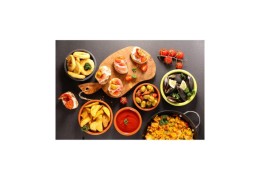
The origins of tapas: the history and tradition of Spanish cuisine
Read more
Tapas, true ambassadors of Iberian cuisine, have taken the world by storm. Discover their fascinating origins, from...
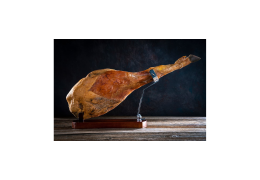
What is ‘Pata Negra’ ham? The meaning and secrets behind the world’s finest ham
Read more
The term ‘Pata Negra’ refers exclusively to 100 per cent Iberian ham from acorn-fed pigs, identified by an official...
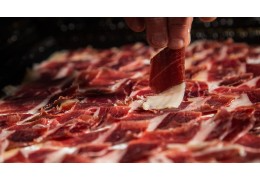
Acorn-fed Iberian ham: a surprising source of oleic acid (the ‘good’ cholesterol)
Read more
What makes Iberian ham so special is its nutritional quality and the way it is produced. Acorn-fed Iberian ham is...
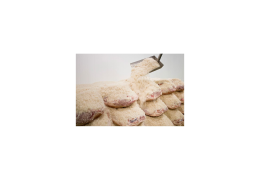
Maturing ham: how to recognise, choose and store a Pata Negra ham
Read more
Pata Negra ham captivates with its flavour, its melt-in-the-mouth texture and its reputation as an exceptional...

Le jambon Pata Negra
The best hams in the world!
Pata Negra or Iberian hams are unquestionably the best hams in the world. If you buy one, you can tell your guests without hesitation. They'll recognize it without a doubt, and they may never have tasted one before. They'll be amazed.
But there are many interesting reasons for this quality: The Iberian pigs and the oak groves that produce the acorns are unique in the world.
It's also worth noting that the official name of Pata Negra Ham is used only for 100% Iberian acorn-fed hams (bellotas). Other hams are called Iberico Bellota, Iberico Cebo de Campo or Iberico Cebo.
Pata Negra Bellota ham: Ham from 100% Iberian pigs fed on acorns (bellotas). Free-range.
Bellota Iberian Ham: Ham from 50% Iberian pigs fed on acorns. Free-range.
Cebo de Campo Iberian Ham: Ham from Iberian pigs fed on grass, cereals and sometimes acorns. Free-range.
Cebo Iberian Ham: Ham from Iberian pigs fed on cereals. Raised on farms.
Iberian pig farming
The Sierra Morena, Sierra de Jabugo, Andalusia and Extremadura are home to Europe's largest oak forests, one of the main farming areas in south-western Spain.
The extensive nature of Iberian pig farming means that the animal goes through a period of development with a diet adjusted in favor of pasture and cereals, gradually increasing its weight.
During the "Montanera", in addition to grass, the animal consumes 8 to 10 kg of acorns per day. During this phase, the pig's fat is replaced by a more fluid, oleic-acid-rich fat, and at the same time, aromas from the acorn's essential oils are incorporated. This extensive, free-range lifestyle gives the animal a robust skeleton and vigorous musculature, with a special texture and muscular infiltration.
Hams from pigs that feed solely on acorns during montanera are called "BELLOTA" and "PATA NEGRA" for those of 100% Iberian breed.
Each pig has at least one hectare of acorn-rich feed on its own.
This infiltrated fat from the acorn feed is what determines the ham's final aroma, and contributes to a better residual roughness during tasting.
There are four stages in the ham-making process.
There are four stages in the ham-making process.
The four stages of ham production
Salting
Salt is added to the ham to act as a natural preservative. During this process, the ham loses its moisture through perspiration, while the salt diffuses into the ham.
Post-salting
Once the ham has been removed from the salt, it is washed in cold water. After a period of equilibration, by controlling the temperature and humidity in the chamber, the salt concentration is evenly distributed throughout the ham.
Natural curing
A series of complex metabolic processes are already taking place in the drying room, during the loss of moisture. A few factors seem fundamental: the hydrometric degree, the direction and speed of the air, atmospheric pressure, and daily temperature variations, since they condition the existence of the autochthonous bacterial and mycological flora, and produce that unique maturation so characteristic and exquisite of hams and shoulders.
Drying takes place naturally, by opening and closing the windows of the buildings to control humidity and temperature. Artificial curing is strictly forbidden in all PDOs, and is never used in the hams offered by Spain-Gourmet.com.
Drying takes place naturally, by opening and closing the windows of the buildings to control humidity and temperature. Artificial curing is strictly forbidden in all PDOs, and is never used in the hams offered by Spain-Gourmet.com.
Ageing in cellars
Under the constant watchful eye of the Master Jamonero, assisted by a team of expert staff, the pieces continue to lose their humudity and increase their concentration of dry extracts, to achieve the aroma and flavor so characteristic of pure acorn-fed hams.
Maturation lasts between 36 and 48 months.
Posted in:
Sample Category
Related posts
 La meilleure charcuterie espagnole disponible en ligne
Découvrez la meilleure charcuterie espagnole en ligne avec Espagne Gourmet.
Read more
Les meilleurs jambons pata negra d'Espagne
Découvrez le secret des meilleurs jambons Pata Negra d'Espagne! Plongez dans notre guide complet et savourez un...
Read more
Guide pour choisir son jambon : clés pour une sélection parfaite.
Découvrez les clés d'une sélection idéale de jambon avec notre guide pratique. Du jambon Serrano classique aux...
Read more
Tout savoir sur l’étiquetage du jambon ibérique
Les étiquettes en couleur des jambons ibériques vous aident à découvrir facilement la qualité du jambon que vous...
Read more