Cookie preferences



 Español
 Français
 Deutsch
 Italiano
 Svenska
 Nederlands
 Português
 Dansk
Dansk
 Polski
 Română
 български език
 Magyar
 Čeština
 Slovenščina
 Slovenčina
 Русский
 中文
中文
 ελληνικά
How do you choose a premium Spanish ham? Discover the differences between 100% Iberian Bellota Pata Negra, Iberian...
Search in blog
Latest posts
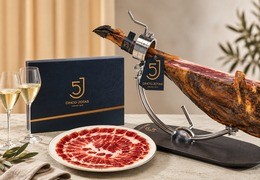
Premium Spanish Ham: How to Choose the Right Iberian Ham
Read more
The health benefits of extra virgin olive oil
Read more
Extra virgin olive oil is the cornerstone of the Mediterranean diet. Find out why incorporating it into your daily...
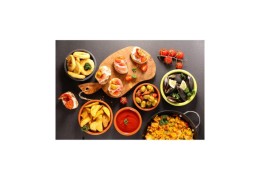
The origins of tapas: the history and tradition of Spanish cuisine
Read more
Tapas, true ambassadors of Iberian cuisine, have taken the world by storm. Discover their fascinating origins, from...
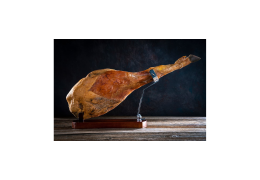
What is ‘Pata Negra’ ham? The meaning and secrets behind the world’s finest ham
Read more
The term ‘Pata Negra’ refers exclusively to 100 per cent Iberian ham from acorn-fed pigs, identified by an official...
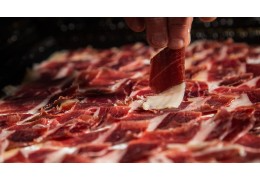
Acorn-fed Iberian ham: a surprising source of oleic acid (the ‘good’ cholesterol)
Read more
What makes Iberian ham so special is its nutritional quality and the way it is produced. Acorn-fed Iberian ham is...
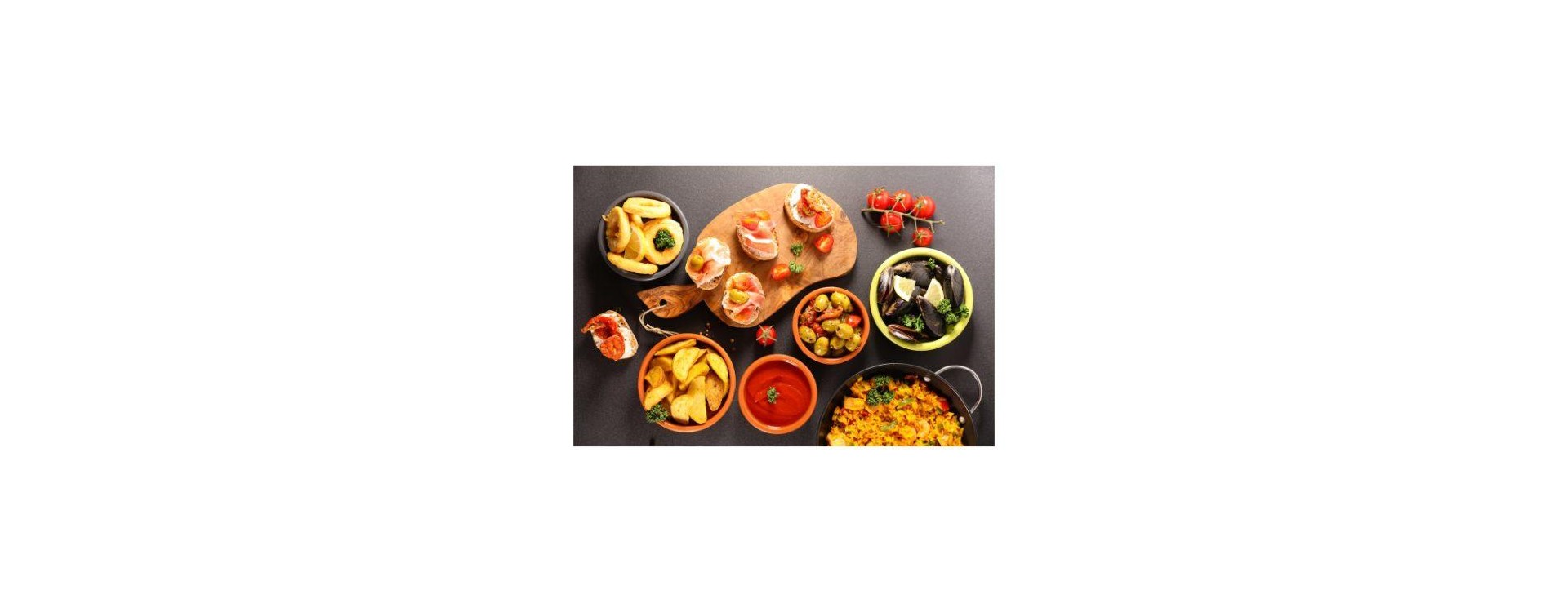
The origins of tapas: the history and tradition of Spanish cuisine
Tapas, true ambassadors of Iberian cuisine, have taken the world by storm. More than just an appetiser, ‘going for tapas’ is a way of life, a moment of conviviality and warmth deeply rooted in Spanish culture. But have you ever wondered what the true origins of tapas are?How did simple bites served in Andalusian taverns become creations of haute cuisine? Delve into this fascinating history, spanning royal myths and folk traditions, to understand the origins and evolution of the Spanish tapa.Where does the word ‘tapa’ come from?To understand the history, we must first look at the linguistics. In Spanish, the verb ‘tapar’ means ‘to cover’ or ‘to put a lid on’.Originally, Spanish tavern owners used to cover their customers’ glasses of wine or sherry with a small plate or, more simply, with a slice of bread, ham or cheese. The aim was purely practical: to prevent dust, sand and flies from falling into the drinks, but also to limit evaporation in the intense Andalusian heat. Gradually, this simple ‘tapa’ became edible.The origins of tapas: Spanish myths and legendsThe exact history of tapas is a fascinating blend of peasant necessities and royal decrees. Here are the three most famous theories vying for credit for this tradition.1. The legend of King Alfonso XThe oldest legend dates back to the 13th century. King Alfonso X of Castile, who was suffering from an illness, was prescribed a few sips of wine throughout the day. To prevent the alcohol from going to his head, he accompanied each glass with small bites of food. Once cured, the monarch decreed that all taverns in Castile must serve a small portion of food with every glass of wine, in order to prevent public drunkenness.2. The story of King Alfonso XIII in CádizThis is the most popular and widely told story in Spain. In the early 20th century, King Alfonso XIII stopped at a famous inn in Cádiz (the Ventorrillo del Chato). As he was ordering a glass of sherry, a strong wind carrying sand from the beach began to blow. To protect the royal wine, the waiter had the ingenious idea of ‘covering’ the glass with a slice of ham. Amused and charmed by the salty flavour of the ham, which enhanced the wine, the king ordered another glass… ‘with the same tapa!’.3. Andalusian workers and tavernsFar from the palaces, it was in Andalusia (particularly in Seville and Cádiz) that the culture of tapas really took root in the 19th century. Workers and day labourers would frequent the taverns after hard days’ work. Serving a small portion of cheese, cured meats or olives (all very salty foods) allowed the workers to regain their strength. But it was also a brilliant business strategy for the tavern owners: the salt stimulated thirst, which increased wine consumption and attracted customers.The evolution of the tapa: from a slice of ham to haute cuisineWhilst the earliest tapas consisted solely of raw ingredients (a slice of Serrano ham, Manchego cheese or bread with olive oil), the concept has evolved.Over time, refrigerated display cabinets appeared on the counters, making it possible to offer more elaborate creations. This gave rise to the great classics that today symbolise Spain: the unmissable Spanish tortilla, Galician-style octopus, gambas al ajillo and the famous croquetas.The Spain Gourmet expert’s view: Today, Spain is undergoing a veritable revolution with ‘gastronomy in miniature’. Michelin-starred chefs are making tapas their own. Yet the golden rule of a successful tapa has remained the same for centuries: the exceptional quality of the raw ingredients. A simple slice of 100% Iberian acorn-fed Pata Negra ham on crusty bread with a drizzle of extra virgin olive oil will always outshine a complex recipe made with mediocre ingredients.Frequently Asked Questions (FAQ): the culture and tradition of ‘tapeo’What is the difference between a tapa and a pintxo?The main difference lies in the presentation and the region. Originating in the Basque Country, a pintxo is traditionally served on a slice of bread and held in place with a small wooden skewer (the ‘pincho’). The tapa, which has more Andalusian origins, is served on a small plate and is often eaten with cutlery or with the fingers.Are tapas free in Spain?It depends on the region. In some cities in Andalusia (such as Granada or Almería) or Castile (such as León), it is still traditional to serve a generous, free tapa with every drink ordered. Elsewhere in the country, tapas are chosen à la carte and you pay for them.How can you organise a tapas-style aperitif at home?Focus on variety and authentic Spanish produce. Prepare thinly sliced Iberian cured meats, hard cheese (such as Manchego), a few high-quality tinned seafood items (mussels in escabeche, anchovies) and olives.Recreate the magic of Spanish tapas at home with Espagne GourmetA tapa isn’t just a bite to eat: it’s a way of experiencing Spain. The secret to an unforgettable aperitif lies in selecting products of impeccable quality, capable of transporting your guests straight to Andalusia.Would you like to organise an authentic tapas night at home? Iberian excellence is just a click away. At Espagne Gourmet, we select the finest acorn-fed Iberian hams, artisan charcuterie, mature cheeses and gourmet tinned foods.Discover our delicatessen and have the finest Spanish products delivered to your door for your tapas.
Posted in:
Sample Category
Related posts
 La meilleure charcuterie espagnole disponible en ligne
Découvrez la meilleure charcuterie espagnole en ligne avec Espagne Gourmet.
Read more
Les meilleurs jambons pata negra d'Espagne
Découvrez le secret des meilleurs jambons Pata Negra d'Espagne! Plongez dans notre guide complet et savourez un...
Read more
Guide pour choisir son jambon : clés pour une sélection parfaite.
Découvrez les clés d'une sélection idéale de jambon avec notre guide pratique. Du jambon Serrano classique aux...
Read more
Tout savoir sur l’étiquetage du jambon ibérique
Les étiquettes en couleur des jambons ibériques vous aident à découvrir facilement la qualité du jambon que vous...
Read more